
Sourcing premium wholesale custom wooden tableware demands rigorous factory-level quality control. For B2B buyers and global distributors, nothing destroys brand reputation faster than customer complaints about warping, structural cracking, and sharp splinters. Understanding the root causes of these manufacturing defects—and how to prevent them—is critical to securing a reliable and profitable supply chain.
The Hidden Costs of Defective Wooden Tableware in Sourcing
When buyers import wooden plates, bowls, and cutting boards, failing to qualify the factory’s production standards leads directly to high return rates.
- Why Warping and Deformation Occur: Wood is a natural, porous material that reacts to its environment. When factories rush production without properly regulating internal moisture levels, the wood fibers expand or contract drastically during international shipping. This shift inevitably causes severe deformation and warped edges.
- The Danger of Splinters and Structural Cracking: Over-drying raw materials makes the internal structure brittle, leading to deep structural cracks. Furthermore, cheap and rushed machine sanding leaves wood pores open. Once the end-user washes the product, these loose fibers raise, creating dangerous splinters that compromise food safety.
How Hizise Manufactures Defect-Free Wooden Kitchenware
At Hizise, we rely on decades of manufacturing expertise to completely engineer these quality risks out of our production lines.
- Strict Moisture Control Protocols:
- Moisture regulation dictates product stability. We test every batch of raw wood with specialized equipment before processing begins.
- We strictly maintain material moisture levels below 20% during production and cure our finished tableware to stay under 15% before shipping.
- Depending on the specific wood density and order urgency, we utilize natural air drying to retain fiber toughness or professional kiln drying to secure the structure quickly.
- Artisanal Hand-Polishing Over Mass Machine Cutting:
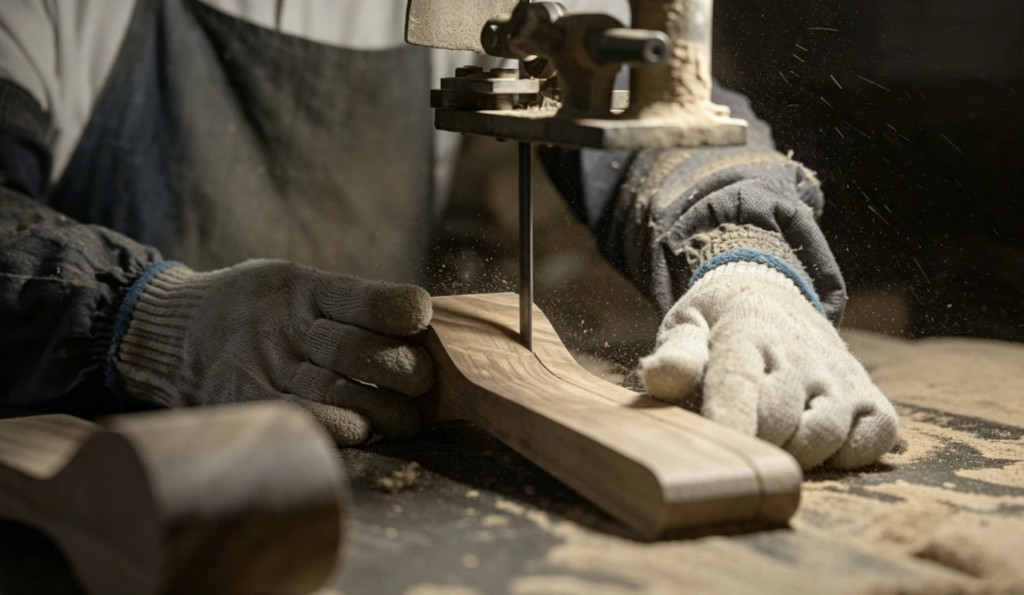
- Automated machines blindly cut through material, often ignoring natural weak points. Our facility employs master craftsmen with over 20 years of hands-on experience.
- These seasoned experts manually draw cutting lines to expertly navigate around natural wood knots, ensuring maximum durability.
- Every curve is meticulously hand-polished, a process that completely eliminates the rough burrs left by standard machine lathes.
- Japanese-Standard PU & Food-Grade Coatings:
- The final finish determines long-term performance. We apply premium food-grade finishes tailored to client needs, including water-based paint, wood wax oil, and olive oil.
- To guarantee zero splinters, our specialized PU coating strictly meets rigorous Japanese export standards.
- We utilize a proven multi-step sealing process: applying a base coat to lock the wood pores, sanding it perfectly smooth, and sealing it with a final top coat. This ensures the wood fibers never raise, even after repeated washing.
- For joined cutting boards, we exclusively use premium food-grade adhesives to prevent seam cracking entirely.
Secure Your B2B Supply Chain with a Trusted Partner
Partnering with Hizise means investing in quality assurance. We manage the complexities of raw material selection, moisture control, and compliance so you can focus on scaling your brand globally.
Stop losing margins to defective products and negative customer reviews. Contact our engineering team today to request physical material samples, review our comprehensive food-grade testing reports, and build a resilient custom wooden tableware supply chain.